Showing posts with label Groundswell. Show all posts

Monday, March 13, 2017

You Can't Do It All By Yourself

We tend to think that extraordinary people simply do extraordinary things. Like the Great Man Theory in history, we often put way too much stock into one person's ability to accomplish amazing things.
 The Great Man Theory posits that for better or worse, people like Napoleon, Hitler, George Washington, Ghandi, Mandela etc... are single-handedly responsible for groundbreaking shifts in history. The theory puts little stock into context and the people around these "great men".


Too often, we see this same type of thinking in our businesses. In this analogy, the "great men" are businesses, or at least their top executives. In other words, there is an unwillingness to listen to the groundswell. Just as we saw with the GM example in chapter of 11 of Groundswell (2011), where the top executives didn't want to engage stakeholders through blogging, many executives invest little to no energy in listening to others. 


The truth is, people don't just accomplish things without any help. There is always a context, there are always contributions from others in one way or another. 

Not everybody is the best at everything like the President here. Most people in leadership positions can use a little help.

The groundswell offers said help for free. As Li & Bernoff show us, the groundswell can act as a company's personal adviser. The obvious way to do this is to take a similar approach to Salesforce.com and Dell. Salesforce and Dell allowed customers and stakeholders to freely share their feedback, criticisms, and suggestions online. Naturally, both Salesforce and Dell, like most other companies that listen to the groundswell, received countless good ideas about how to improve. Many of those ideas were implemented. No matter how smart or creative you are, no one is a match for the brainstorming power of the internet.

Elon Musk, CEO of SpaceX and Tesla, showed us a great example of implementing ideas from the groundswell to improve his company. One Twitter user complained that he had trouble charging his car because people who were always leaving their cars parked at charging stations while they did other things, even though their cars are already fully charged.

Image result for elon musk

Musk replied to the tweet, acknowledging that this was a problem. Within less than a week, Tesla
imposed a fee that charges drivers who leave their cars idle after they're done charging. 


The groundswell doesn't stop there either. Like we saw with Best Buy's Blue Shirt Nation, there is so much to gain from listening to your employees. Sure, as stakeholders, customers are very likely to have key insights on how best to improve a product or service. Employees though, work within a company everyday. Nobody is more involved with a company than those who work in it. So wouldn't they know the most about it?

Let's take Mark Zuckerberg for example. If anybody would act as proof for the Great Man Theory, it would be him, right? Self-made, took a simple idea and turned it into an internet empire from his college dorm room. He's barely 30 and he's already a billionaire. One Great Man changing the course of history right?


Image result for mark zuckerberg

The actual story isn't so simple. We're all aware of how successful Facebook has been, but less of us are aware of what their culture is like. Turns out, over 99% of Facebook employees have a positive view of their CEO. There's a reason for that incredibly high number. 

A Facebook employee commenting on the website Quora recently said, “After I joined Facebook in 2010, I worked on a secret project, ‘graph search.’ Within a couple months, I attended two Zuck reviews to discuss the project.” The fact that the CEO of one of the world’s most dynamic and fastest growing companies is meeting with entry-level employees says a lot about the way Zuckerberg does business.

Zuckerberg has broken down traditional hierarchies at Facebook. His reasoning is that any of his employees could potentially have the next big idea. He trusts that they have a lot to contribute, and that trust almost always translates into results. 

Sure, Mark Zuckerberg has accomplished an incredible amount on his own, but the reason Facebook has been so successful is because its CEO is open to getting help. Zuckerberg has tapped the groundswell within his own organization, and it's paid dividends. 


The moral of the story is that people don't simply accomplish things on their own. No matter how impress any one person may be, that person always can use some help. In the digital age, this is more true than ever. Help is everywhere. It has never been easier to find. All we need to do is ask.

Wednesday, March 1, 2017

Social Media Monitoring Part 1: The Walking Dead

Image result for the walking dead walkers

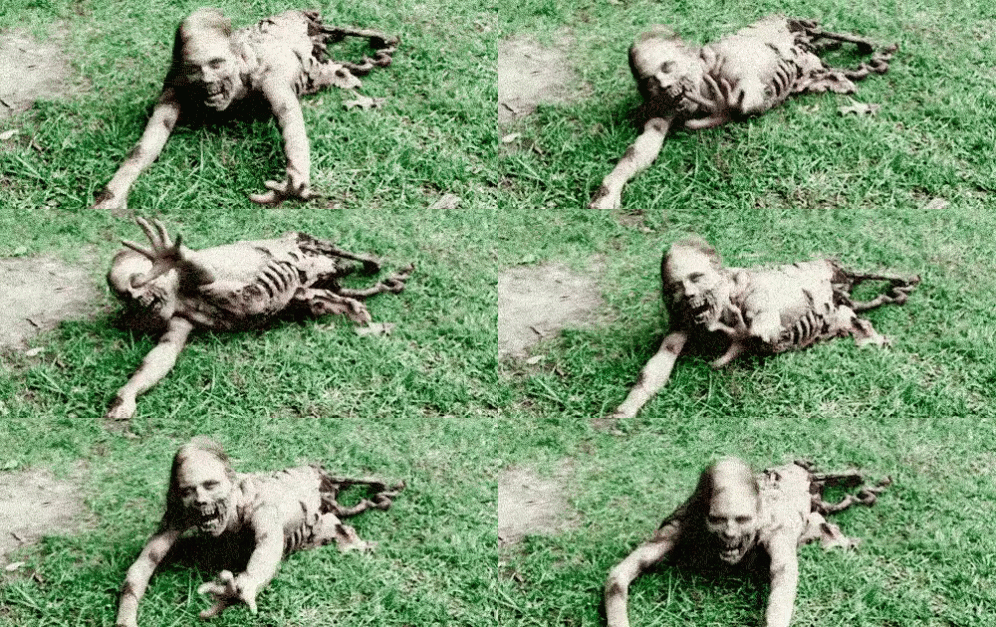
THE WALKING DEAD. Even if you don't watch it, you've heard of it. Based on the already popular comic book/graphic novel series, The Walking Dead (TWD) has taken America, and even the world, by storm. As of now, TWD is the world's second most popular show behind Game of Thrones. Despite TWD's smaller budget and less-well-know actors, it has dominated social media unlike any other TV drama. Compared to Throne's roughly 20 million Facebook followers, TWD comes out far strong with around 36 million followers. You can read along with the theme if you want:


Image result for walking dead gif
Aside from being one of the most talked about and watched shows world-wide, the Walking Dead absolutely kills it in the social media game. Normally, fans of a TV show are just expected to tune in once a week. The Walking Dead keeps its fans engaged at all times. There is a concerted effort to create and maintain a perpetual groundswell. Look how active their Facebook page is. Let's pretend we're part of the TWD marketing team:
Just a friendly reminder the show's airing tomorrow... 21 thousand likes. 


Who wants to be a part of the show? Just tune in on Sunday to be part of this sweepstakes. Oh, also tell all of your friends about it

Hmmmm... people aren't talking about last week's episode so much anymore. Maybe we can give them something else to talk about. Oh! How about an art contest! 51 thousand likes.


Guys, just wanted to remind you about our art contest.

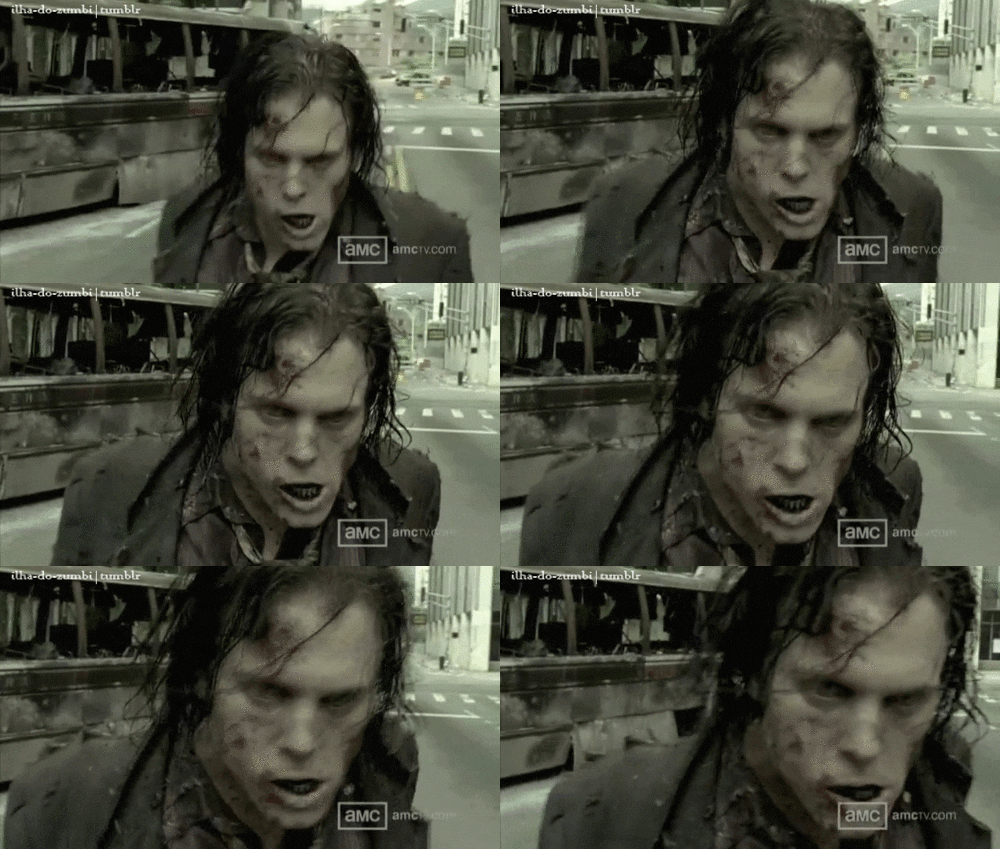
Look at how the TWD team are constantly engaging the groundswell. Only one of the four most recent posts was actually about the show. The rest were about the fans. Show us YOUR fan art. Do YOU want to be a zombie on the show? 

The way The Walking Dead engages the groundswell is genius. You know all those shows that involve fans? American Idol. So You Think You Can Dance. TWD took that concept and applied it to a TV drama. The drama genre has never engaged and involved fans as much as TWD has. They've created a feeling that fans are a part of the show, just like American Idol.

In addition to a highly active Facebook page, The Walking Dead has ANOTHER show that accompanies it (Not Fear The Walking Dead, which is a spin-off show). The Talking Dead airs immediately after every episode on the same network, AMC. Take a look:


"So, from @5Braydon on twitter: D'angelo, how do you think Negan will react when he finds out that Rick's group is planning to fight?" Again, they're making the fans a part of the show. Regardless of whether there was a Walking Dead talk show or not, people would still post about the show. However, having a show that explicitly encourages fans to post (with a chance of seeing their post on TV), doubtlessly prods the groundswell to grow. 

Given all this, do you still think The Walking Dead is lacking when it comes to engaging the groundswell? Well, here's some proof. 


This is a screenshot of the social media activity surrounding TWD from the past five years, courtesy of Google Trends. See a pattern?Sign of the Horns on Apple iOS 10.2 
There's a reason you see double peaks/valleys resembling the "rock-on" hand sign. The walking dead airs half of a season, takes a few weeks off, and then airs the second half of their season. After the second half of the season, the show takes a much longer break before its next season. The Walking Dead gets an enormous amount of social media activity for its season premieres. The activity then drops off a little until it usually picks back up to a comparable level for the mid-season finale (which tends to be among the most dramatic moments in a season). Then, there is the mid-season break, which accounts for the steep U-shaped valley between "rock-on" emojis. Finally, social media activity is obviously weakest between seasons. 

If you go back and look at the last graph though, you'll notice an outlier. Look what happens at the far right of the graph. Whoa! That spike is almost twice as tall as any of the others!

The Walking Dead finished their sixth season with arguably one of the biggest cliffhangers in TV history (We won't go into detail. Don't worry, no spoilers). So that's one explanation for that huge spike. But that's probably too simple. 

Look at the build-up to that spike. Unlike the other seasons, the groundswell starts to stir a little bit before the season started. That's because they incessantly posted commercials and promotions like the one above. If you're a fan of the show, you probably remember seeing a promotion for the new season twice a day on your Facebook feed. 
Image result for walking dead season 7 premiere date
Those promotions weren't just the same commercial every time either. They kept coming up with new clips, teasing fans who were desperate to know who met Lucille. You can't explain that enormous spike in social media activity without acknowledging that the show-runners were setting up the platform for a groundswell boom for months. 


Here's a look at the top searches in the past seven years (the same time span represented in the above graph):


See the word "Negan"? That's the guy with the scary looking baseball bat from the commercial. Notice that it's at the top of the search list. That means that a new character topped the search list even though he's only been on screen for about ten minutes. Safe to say, that cliffhanger got the groundswell pretty antsy for a new season.

The social media activity over the last seven years has been pretty consistent across all fifty states. As you can see, the whole map is pretty much the same color of blue:


The Walking Dead didn't get the same consistency worldwide, but they're probably not too upset about it:


Surprisingly, the U.S. isn't even in the top five in social media activity. So yeah, the social media activity is really strong for TWD in the States, but it isn't even their most prolific. TWD is taking over the world. 

Now that we have an idea of how TWD engages its groundswell over a long period of time, let's take a closer look at the numbers regarding how they manage their day-to-day social media activity. Here's their activity from February 21st to February 28th:


You can tell over the course of the week, social media activity is pretty calm. There are bumps everyday during peak social media hours Monday through Friday. Also unsurprisingly, you get a huge bump on Sunday (Feb. 26th) when the show airs. What is unique about The Walking Dead though, is that second peak on Monday. It's almost as high as when the show actually aired. It's almost impossible to keep people talking about a show all week. I mean, they do have lives, but to mimic social media activity the day after the show actually aired is quite impressive.
Image result for rick walking dead gif
Let's take a closer look at activity throughout the week. These are snapshots from three different days of the week. One from a Thursday, one from Sunday, and one from Tuesday:

Thursday February 23rd


Remember the art contest? Artwork is one of the top search words related to TWD.

Sunday February 26th


Tuesday February 28th


OK, there's a lot of numbers to go over there. The first thing that stands out are the Sunday numbers. That snapshot was taken right after the show aired. Shouldn't we see the largest percentage for strength during the strongest social media time of the week? Social Mention defines strength as "the likelihood that your brand is being discussed on social media. A very simple calculation is used: phrase mentions within the last 24 hours divided by total possible mentions." 
Image result for negan gif
It probably isn't as simple as they say. It isn't clear what is meant by "total possible mentions". Does "possible" mean the most activity the brand has ever reached? Is it an arbitrary number social mention devised? Is it weighted for that particular time? 

Unfortunately, the website doesn't answer these questions. However, it might be fair to assume that "total possible" indeed refers to the most activity a given brand has ever registered at a particular time of the week (or maybe year?). There aren't many other explanations for why peak social media hours are lower than random points in the week. 

If this is true, that means the TWD team can understand exactly how strong any one of their given episodes is. At 80%, February 26th's episode was decent, but definitely not one of the show's best. 

Image result for the walking dead eugene

Another conclusion we can draw is that A LOT of people are talking about the show. The passion numbers range from 29%-32%. Clearly not much variance there (though I saw the number reach 59% at one point). Passion measures the strength of a brand's base relative to more casual followers. In other words, a high strength percentage means a lot of people post about a brand multiple times in a short time span. For The Walking Dead, there's definitely a strong base, but the high volume of social media activity drives the passion number down throughout the week because the percentage of people posting multiple times is reduced the more people post only once.

Overall, The Walking Dead has been extremely successful in engaging the groundswell. Yeah, it's a good show, but what's remarkable is how they've marketed it. There's a constant effort to keep loyal fans involved as well as to attract new fans. They even chased football fans at the Superbowl:


The Walking Dead has received criticism from fans and casual for a lot of different things. Bad acting, boring episodes, boring characters, slowing story line, the list goes on. Despite those criticisms, which have gotten plenty of shows canceled, TWD has persevered. By engaging the groundswell constantly, and in several different, creative ways, it had its biggest social media boom to date this season. Don't expect the momentum to stop here. The dead are coming.

Image result for walking dead gif

Monday, February 20, 2017

Politicians Have a Lot to Learn from Business

If Li and Bernoff make one thing clear, it's that you HAVE to pay attention to the groundswell. There's just too much to gain, and too much to lose. You need to listen to the groundswell as much as you need to participate in, and engage with it. For the most part, it seems companies have caught on to this. As Li and Bernoff point out, TiVo is a perfect example of engaging with the groundswell. TiVo supported an independent forum about their service, listened to it and changed accordingly.  
Image result for tivo

Naturally, companies are better off once they listen to the groundswell. What is there to lose when stakeholders are telling you exactly what they want?

There is a deeper way to think about the groundswell though. There are so many ways social media has changed our world. Almost every company is actively involved in it now. But maybe the groundswell's biggest impact is yet to come, or maybe it's just started. In 2007, we saw the first example of a politician truly using social media in an effective way. Remember this?

Image result for obama social media

There even used to be a feature where you could color a picture of your own in the same way as the picture above. Then people started to make it their Facebook profile picture. Talk about free publicity. To be fair, politicians learned some lessons from Obama's groundbreaking campaign. 

The two most successful campaigns of the last presidential campaign (if you consider the expectations going into the campaign), were, by far, Bernie Sanders' and Donald Trump's. There's a lot of different reasons for the success of those campaigns, but one obvious common thread between them is how they totally dominated social media. Have a look at Bernie Sanders' Facebook page, or Trump's Twitter. The number of likes or retweets on either's page is astounding. They've clearly struck a chord with their supporters on social media. 

More importantly though, they listened. While all their opponents went on to all the conventional TV shows, Trump and Sanders recognized the demand for them to appear on Youtube shows, to engage with online platforms. Li and Bernoff argue that you need to find your base (your most loyal and enthusiastic stakeholders) and empower as well as reward them. That is exactly what the two politicians did when they granted popular right and left wing shows interviews that other candidates didn't. Trump went on Infowars (a popular right-wing Youtube channel) whereas Bernie went on The Young Turks (a popular left-wing channel). Both interviews are very long, but you can check them out below if you're curious.


Many people ridiculed Clinton's and Cruz's attempts to attract millennial voters, and with good reason. They didn't listen. They didn't take the groundswell's advice either. It would be bold to argue that this social media savvy didn't play an enormous role in Sanders' and Trump's campaign success. It almost certainly did. 

So will all politicians learn from these lessons? It's never been easier to know what your constituents want, nor has it been easier to communicate with them. It's possible Trump was even better than Sanders on social media because he responded to others posts (though the caused a lot of backlash, but also a lot of publicity) whereas Sanders simply provided a lot of content. It would be wise for politicians to respond to people on social media the same way corporations do. 

Engaging with and understanding the groundswell has worked incredibly well for companies across the world. So why haven't politicians caught on yet? In this age, with all the data available to us, no politician should ever be criticized for being out of touch with the people. The tools to stay in touch are just too easy to access. It's only a matter of time before we see more dramatic changes in how campaigns of all sorts, all around the world, fundamentally transform. Though the groundswell has already been affecting politics, politicians have not yet engaged with it in a nearly effective enough way.

Monday, February 6, 2017

Making the Groundswell Work For You

It's one thing to understand the groundswell. It's another thing entirely to use it to your advantage. The groundswell can be scary. One misstep, and all of the sudden, everybody and their grandma is talking about you online. Once a groundswell starts, it's pretty damn hard to stop.

Just ask Justin Timberlake... About a year ago, Justin Timberlake posted "JesseWilliams, tho #Inspired" to Twitter. The tweet came in response to a speech actor Jesse Williams made at the BET awards about the continued oppression of black Americans. The speech was widely lauded as insightful and powerful. When Timberlake posted his tweet, I doubt he thought a three word post would get him in any trouble. Queue the groundswell.  
Image result for justin timberlake gif
The end of Willliams' speech was a scathing critique of cultural appropriation. A lot of people found Timberlake's tweet to be ironic, given that he used to dress like this:
To be sure, Timberlake had no intention of being ironic. Unfortunately for him, he was now the center of a social media firestorm, a groundswell. Regardless of how you feel about the speech, or Timberlake's response to it, the point remains the same. You can get caught in a groundswell for almost ANYTHING.

That's why you want to learn jiu jitsu. Ok, well not actually. Jiu jitsu is a martial art that has a fighter use his/her opponents own attacks against him/her. In other words, though the groundswell can be scary, you can still use it to your advantage.  
Image result for jiu jitsu
In Justin's case, there probably isn't much you can do to weather the storm. He tried apologizing, but it just seemed to keep drawing attention to the controversy. He had unwittingly accessed the least forgiving aspect of the groundswell.

Companies and other types of organizations are terrified of what happened to Justin Timberlake. The smallest mistake can drag your brand through the dirt for weeks. What many of them don't understand is that the groundswell is often a weapon, of sorts. Though the weapon can be used against them, they can also wield it themselves.
Image result for really? gif

Yeah, really. The days of Mad Men are gone. Sorry, Don Draper.

 Image result for don draper

You don't have to guess what your customers are thinking anymore, designing marketing campaigns for strategies you think might work. That information is readily available for you.  The POST strategy is one way you can try to use the groundswell in your favor. POST stands for People, Objectives, Strategy and Technology. What do your customers (People) want? Are you trying to get market data or promote your product (Objective)? How do you want to achieve your goals (Strategy)? And what medium are you going to use to get your message across (Technology)?

Following POST, or even having an understanding of the groundswell, and how to "jiu jitsu" it (yeah, I'm using it as a verb), can take you far. The groundswell is a reality. You can lament its existence, constantly fearing how it will bring about your downfall, or you can begin to understand it and use it to your advantage. To be successful in today's media climate, you need to use the groundswell to your advantage. Like a wave at the beach, it can be dangerous if you just stand there and let it wash over you. But also like a wave, an understanding of how it works can lead you to a good time. You can either be crushed by the wave, or learn how to surf on it.